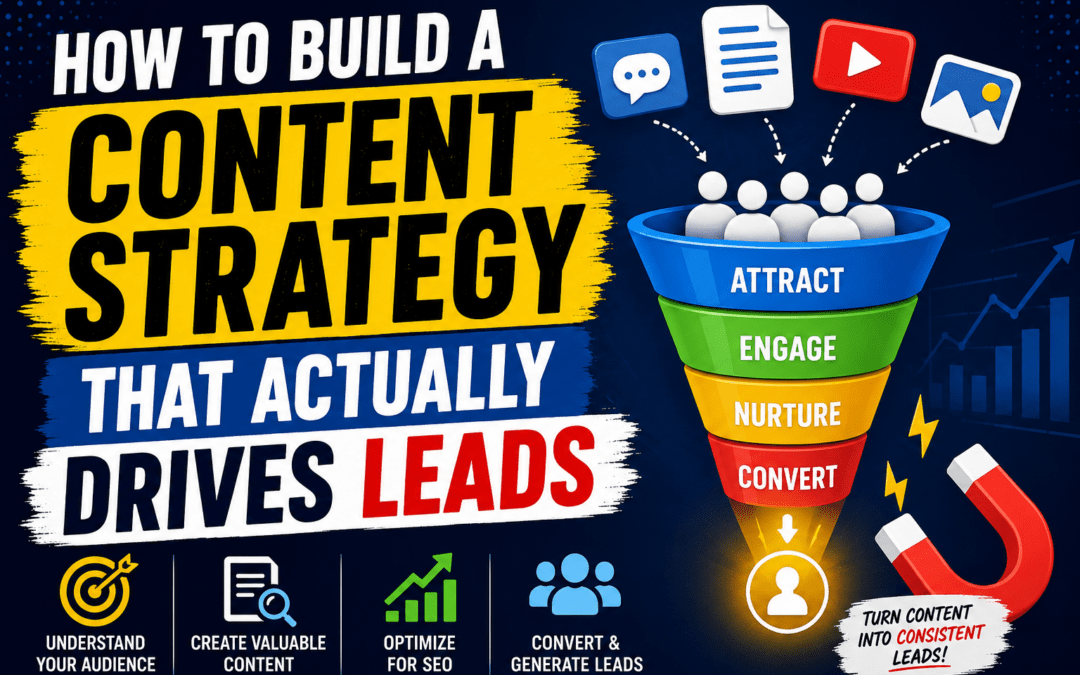
Build a Content Strategy That Actually Drives Leads
In today’s digital world, creating content is easy. But creating content that consistently brings in leads and converts visitors into paying customers? That’s where most businesses struggle.
Many brands publish blogs, social media posts, and videos regularly, yet they see little to no business growth. The reason is simple — they are creating content without a clear strategy.
A successful content strategy is not about posting more content. It’s about creating the right content for the right audience at the right time.
If you want your content to generate real business results, this guide will help you build a content strategy that actually drives leads.
Understand Your Target Audience First
Before writing a single blog post or creating a social media campaign, you need to understand who your ideal customer is.
Ask yourself:
- What problems are they facing?
- What questions are they searching online?
- What type of content do they consume?
- Which social media platforms do they use?
- What motivates them to make a purchase?
The better you understand your audience, the easier it becomes to create content that connects emotionally and solves real problems.
For example, if you run a digital marketing agency, your audience may be small business owners looking for affordable ways to grow online. Your content should focus on practical solutions, not complicated industry jargon.
Set Clear Goals for Your Content
One of the biggest mistakes businesses make is creating content without a goal.
Every piece of content should have a purpose.
Your goals may include:
- Generating website leads
- Increasing email subscribers
- Building brand awareness
- Driving traffic from Google
- Booking consultations
- Increasing product sales
When your goals are clear, your content becomes more focused and measurable.
Instead of publishing random blog posts, you can create content that directly supports your business objectives.
Focus on SEO From the Beginning
Search Engine Optimization (SEO) is essential if you want long-term traffic and consistent leads.
People are already searching for solutions online. Your job is to make sure your content appears when they search.
Start by researching keywords your audience is using.
For example:
- “best website design company”
- “how to improve local SEO”
- “affordable digital marketing services”
- “gardening services near me”
Use these keywords naturally in:
- Blog titles
- Headings
- Meta descriptions
- Image alt text
- Internal links
- Website URLs
Avoid keyword stuffing. Google now prioritizes helpful, human-focused content over robotic writing.
Write for people first, then optimize for search engines.
Create Content for Every Stage of the Buyer Journey
Not everyone is ready to buy immediately.
Some people are just discovering a problem, while others are actively comparing solutions.
A strong content strategy addresses all stages of the customer journey.
Awareness Stage
At this stage, users are looking for information.
Examples:
- “What is SEO?”
- “Why is website speed important?”
- “Benefits of pressure washing services”
Consideration Stage
Here, users are comparing options.
Examples:
-
“Best SEO tools for small businesses”
- “Website builder vs custom website”
- “Professional gardening services vs DIY”
Decision Stage
Now they are ready to take action.
Examples:
-
Case studies
- Testimonials
- Pricing guides
- Service pages
- Free consultations
When your content supports the entire journey, you naturally generate more qualified leads.
Consistency Matters More Than Perfection
The ad ranking algorithm uses multi-objective optimization to weigh several factors simultaneously:
Many businesses stop creating content because they don’t see instant results.
Content marketing is a long-term investment.
One high-quality blog per week is far more effective than posting daily for one month and disappearing afterward.
Create a realistic content schedule you can maintain consistently.
For example:
-
1 SEO blog weekly
- 3 social media posts weekly
- 1 email newsletter monthly
- 1 case study monthly
Consistency builds trust, improves SEO rankings, and keeps your brand visible.
Use Strong Calls-to-Action (CTAs)
Even excellent content can fail if you don’t guide readers toward the next step.
Every blog or landing page should include a clear call-to-action.
Examples:
-
Contact us today
- Book a free consultation
- Download our free guide
- Request a quote
- Subscribe for updates
Make your CTAs natural and helpful rather than overly aggressive.
People respond better when they feel guided rather than pressured.
Repurpose Your Content
Creating new content constantly can be time-consuming.
A smarter strategy is to repurpose existing content into multiple formats.
For example:
-
Turn a blog post into social media posts
- Convert statistics into infographics
- Create short videos from blog topics
- Use customer reviews as testimonials
- Turn FAQs into SEO-focused articles
Repurposing saves time while maximizing the reach of your content.
Track Performance and Improve
A content strategy should evolve based on real data.
Monitor metrics such as:
-
Website traffic
- Bounce rate
- Keyword rankings
- Lead conversions
- Time spent on page
- Social media engagement
Tools like Google Analytics and Google Search Console can help you understand what’s working and what needs improvement.
If certain topics generate more traffic or leads, create more content around those subjects.
Content marketing is not guesswork — it’s continuous learning and optimization.
Build Trust Through Authenticity
People connect with brands that feel human.
Don’t be afraid to:
-
Share real experiences
- Show behind-the-scenes content
- Tell customer success stories
- Use conversational language
- Show your expertise genuinely
Authenticity builds trust, and trust generates leads.
Your audience doesn’t just want information — they want confidence that you understand their needs.
Final Thoughts
A content strategy that drives leads is built on understanding your audience, creating valuable content, optimizing for SEO, and staying consistent over time.
The goal is not simply to attract traffic. The goal is to attract the right people and guide them toward becoming customers.
When done correctly, content marketing becomes one of the most powerful and cost-effective ways to grow your business online.
Start small, stay consistent, and focus on helping your audience solve real problems. The leads will follow naturally.